When the Brackets Went Dark: What a Collapsed Major Tournament Reveals About Competitive Slingshot's Growing Pains
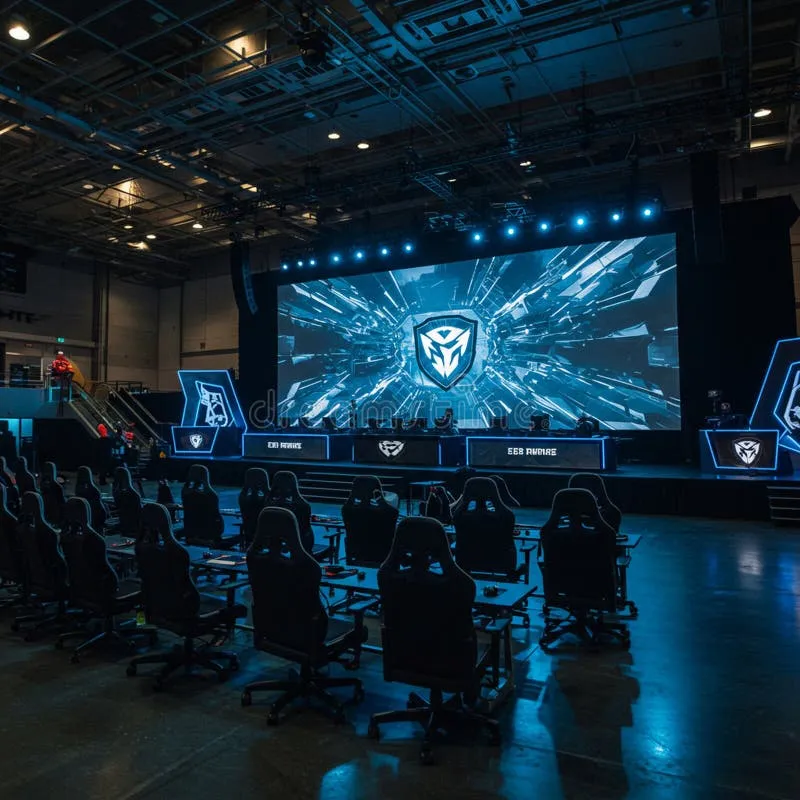
Photo: empty gaming tournament venue chairs setup cancelled event, via thumbs.dreamstime.com
For weeks, the Discord channels were buzzing. Players from fourteen states had registered. Travel was booked. Prize pools were posted publicly — numbers big enough to matter, small enough to be believable. Then, seventy-two hours before the first bracket was set to run, the organizer's account went dark. The venue contract fell through. The money, for many entrants, was simply gone.
What happened to the Midwest Invitational — a mid-tier competitive slingshot event that collapsed under the weight of its own ambition and a cascade of organizational failures — isn't an isolated incident. It's a symptom of something the competitive slingshot scene has been reluctant to talk about plainly: the infrastructure hasn't kept pace with the enthusiasm.
The Setup
The Midwest Invitational was announced in early spring via social media, promising a two-day event with multiple competitive categories, a live-streamed finals bracket, and a combined prize pool that would have ranked it among the more substantial regional tournaments in recent memory. Registration filled quickly. The organizer — a well-known figure in online slingshot gaming communities who had run smaller local events successfully — seemed credible.
But credibility built on community goodwill doesn't automatically translate into logistical competence, and the gaps started showing early. Venue confirmation was delayed twice. Communication from the organizing team became sporadic in the weeks leading up to the event. Players who asked direct questions in public forums were told everything was fine.
It wasn't fine.
Three days before the event, the venue — a convention space in the Chicago suburbs — confirmed to multiple attendees directly that the event had not been fully paid for and that the space would not be available. The organizer, reached by several players via direct message, initially disputed this, then went quiet entirely.
"I had already bought plane tickets," says Marcus Delray, a competitive player from Atlanta who had registered for the open division. "I spent probably four hundred dollars total between registration, flights, and a hotel deposit. And then just — nothing. No refund, no explanation, no accountability."
What Actually Failed
Post-collapse, a clearer picture emerged through conversations with multiple affected competitors and a partial accounting shared by one of the organizer's former volunteers.
The financial structure of the event had been precarious from the start. Registration fees were collected upfront and used to cover early venue deposits, but the total fees collected never matched the projected costs. The organizer had apparently anticipated sponsorship revenue that didn't materialize — a common and dangerous miscalculation in grassroots competitive gaming.
There was also no legal framework protecting competitors. No escrow arrangement for prize money. No written contracts with vendors that included penalty clauses. No refund policy documented anywhere accessible. Essentially, the entire financial architecture of the event rested on trust and forward momentum — neither of which survived contact with reality.
"This is what happens when community enthusiasm gets ahead of professional standards," says Tyler Briggs, who runs a regional slingshot league in the Pacific Northwest and has spent years developing what he describes as a boring but functional operational playbook. "Everybody wants to throw a big event. Not everybody wants to do the spreadsheets and the legal paperwork that makes a big event survivable when things go sideways."
The Liability Nobody Talked About
One of the more uncomfortable conversations that emerged in the aftermath was about legal liability — specifically, the near-total absence of it in how most grassroots slingshot tournaments are structured.
When a competitor spends money to attend an event that then collapses, their recourse is, in most cases, essentially nothing. Small claims court is theoretically available, but pursuing it across state lines for a few hundred dollars is rarely practical. Credit card chargebacks work for registration fees paid directly, but not for flights or hotels booked independently.
The competitive scene, in its current form, operates almost entirely on informal social contracts. That works fine when everyone is acting in good faith and nothing goes wrong. It fails completely the moment either of those conditions breaks down.
"We need standard agreements," says Priscilla Vance, a lawyer and competitive slingshot player based in Denver who has been pushing for formalized event standards in online community discussions. "Prize pool escrow. Refund timelines. Vendor contracts with cancellation clauses. This isn't complicated stuff — it's basic event management. The fact that it's not standard practice in our scene is genuinely embarrassing given how much money is now moving through these events."
The Players' Response
Across forums and Discord servers, the collapse of the Midwest Invitational generated more sustained, substantive discussion than most competitive slingshot news in recent memory. The frustration was real — but so was the determination to turn the failure into something useful.
A loose coalition of regional organizers and veteran competitors has begun drafting what they're calling a community event standard — a set of minimum requirements that events would need to meet to receive community endorsement and promotion across major slingshot gaming platforms. The framework is still informal, but the direction is clear: transparency around finances, documented refund policies, and verified venue contracts before any registration opens.
"Nobody's trying to make this corporate," Briggs says. "We just want events that don't blow up in people's faces and cost them money they can't afford to lose."
What the Scene Has to Decide
The Midwest Invitational's collapse is, in the end, a stress test the competitive slingshot scene didn't know it was taking. The results were not great. But the response — the willingness to examine what went wrong and push for structural change — suggests a community that's maturing, even if the process is uncomfortable.
The slingshot scene has built something real over the past several years: genuine competition, genuine stakes, genuine community. Protecting that requires more than enthusiasm. It requires the unglamorous work of building systems that hold up when things go wrong.
The brackets went dark once. The goal now is making sure they never have to again.