Dusty Cabinets, Big Money: Why Retro Slingshot Machines Are the Hottest Thing in Collector Culture Right Now
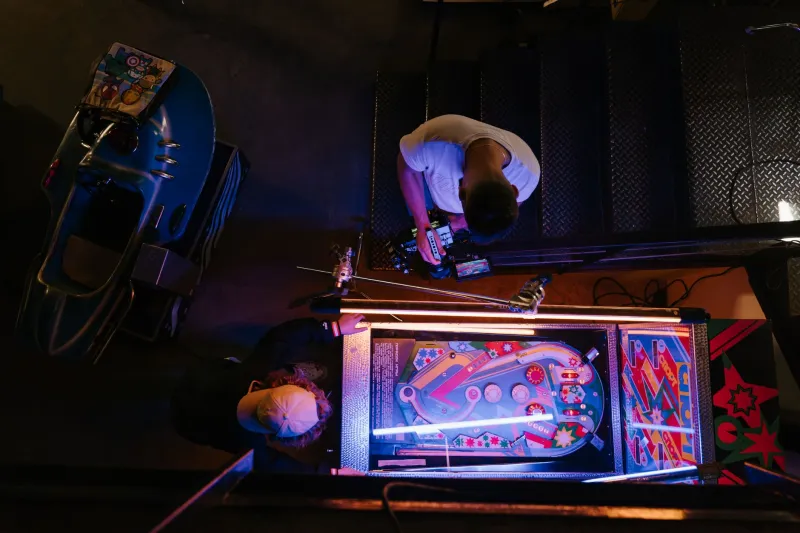
Walk into the right basement in suburban Ohio or a tucked-away game room in Austin, Texas, and you might stumble across something that looks like it belongs in a 1980s pizza parlor. Faded side art, a coin slot worn smooth from decades of quarters, a joystick that still clicks with satisfying resistance — and underneath all that patina, a slingshot physics engine that somehow still feels magical. Retro slingshot arcade cabinets are having a serious moment, and the collector community is taking notice in a big way.
What was once a niche obsession for a handful of dedicated hobbyists has quietly exploded into one of the more competitive corners of the retro gaming market. Prices at auction houses like Heritage Auctions and regional game expos have climbed steadily over the past three years. Restoration specialists who once had a manageable backlog are now booking months out. And online forums dedicated to tracking down original hardware are buzzing with a new wave of younger collectors who discovered these machines through YouTube rabbit holes and retro gaming documentaries.
The Machines That Started It All
To understand why these cabinets matter, you have to go back to the mechanics themselves. Early slingshot-style arcade games — titles built around elastic tension, projectile arcs, and target destruction — were engineering marvels for their time. Developers working with limited processing power had to lean hard into physical feedback. The result was a genre that communicated trajectory and force through sound, haptic resistance, and visual cues in ways that felt almost tactile.
Pinball machines were a natural companion to this world. The slingshot bumpers found on virtually every pinball table from the 1970s onward aren't just decorative — they're the mechanical heart of the game's chaos engine. When a ball clips a slingshot bumper and rockets unpredictably across the playfield, that's a genuine physics interaction happening in real time, no algorithm required. Collectors who grew up pumping quarters into these machines remember that feeling viscerally, and they're willing to pay serious money to recreate it.
"There's a weight to it," says Marcus Delray, a restoration specialist based in Nashville who has rebuilt over 200 machines in the past decade. "When you pull back a real slingshot mechanism and let it go, you feel the release in your whole body. Digital versions are great, but they're approximating something that used to be completely physical. People are chasing that original feeling."
Auction Floors Are Getting Competitive
The numbers back up what collectors are saying anecdotally. Restored cabinet units that sold for $800 to $1,200 at regional expos five years ago are now regularly clearing $3,000 to $5,000. Rare variants — limited production runs, prototype cabinets, or machines tied to specific regional arcade chains — can push well beyond that. A fully restored Williams Pinball cabinet featuring intact slingshot bumper assemblies and original artwork sold at a Midwest gaming expo last fall for just over $8,500, drawing bids from collectors in four states.
Part of what's driving prices up is simple scarcity. These machines weren't built to last forever. Decades of heavy use, improper storage, and parts cannibalizing have thinned the herd considerably. Finding a cabinet with its original components intact — especially the slingshot mechanisms, which took a beating from constant use — is increasingly rare. That scarcity creates urgency, and urgency creates bidding wars.
Online marketplaces like eBay have also made the market more transparent and more competitive simultaneously. A machine sitting in a garage in rural Minnesota is now visible to a collector in Florida within hours of listing. That national reach has been a double-edged sword: great for sellers, challenging for buyers who used to rely on local knowledge and regional pricing.
New Players, Old Hardware
Here's the part of the story that might surprise you: a significant chunk of today's retro slingshot collectors are younger than you'd expect. We're talking people in their mid-twenties to mid-thirties who didn't grow up feeding quarters into arcade machines but discovered the genre through mobile games, YouTube restoration channels, or community spaces like Reddit's r/arcade and various Discord servers dedicated to vintage gaming.
For this crowd, the appeal isn't pure nostalgia — it's novelty. Growing up on touchscreens and analog sticks, encountering a real slingshot mechanism for the first time feels genuinely alien in the best possible way. The unpredictability, the physical feedback, the way a machine ages and develops its own personality through wear — none of that translates to a digital experience.
"I got into Angry Birds as a kid and thought I understood slingshot games," admits Jordan Calloway, a 28-year-old collector from Portland who currently owns six restored machines. "Then I played an original cabinet at a friend's place and realized I had no idea what I was missing. The digital version is a simulation of a feeling. The real machine is the feeling."
That distinction — simulation versus sensation — keeps coming up in conversations with collectors and restoration experts alike. It points to something genuinely interesting about what retro slingshot mechanics offer that modern digital versions, however polished, simply can't replicate.
The Restoration Game
For those looking to get into the hobby, restoration is both the biggest barrier and the biggest draw. Original slingshot mechanisms require sourcing period-correct rubber bands, metal brackets, and sometimes custom-fabricated parts that haven't been manufactured in decades. Solenoid coils burn out. Playfield surfaces wear through. Artwork fades or peels.
Restoration specialists like Delray have built entire businesses around solving these problems, but demand is outpacing supply. "I've got a six-month waitlist right now," he says. "A year ago it was maybe six weeks. The interest has just exploded."
Online communities have stepped up to fill some of the gap. Dedicated forums host detailed guides on rebuilding slingshot assemblies, sourcing replacement parts, and refinishing playfields. 3D printing has become a genuine game-changer for sourcing discontinued plastic components. What once required hunting through swap meets and estate sales can now sometimes be solved with a printer and the right file downloaded from a community repository.
What This Means for the Broader Slingshot Community
The retro collector boom isn't happening in isolation — it's part of a broader cultural moment for slingshot gaming as a whole. As competitive digital slingshot titles build larger audiences and mobile physics games rack up billions of downloads, more players are developing a genuine curiosity about where all of this started. The arcade cabinet sitting in someone's basement isn't just a collectible — it's a historical artifact that explains the DNA of an entire gaming genre.
For Slingshot HQ readers who have spent time mastering trajectory calculations in modern titles, getting hands-on with a vintage machine offers a different kind of education. The physics aren't cleaner or more refined — they're messier, more chaotic, and completely unforgiving in ways that digital games have largely smoothed away. That rawness is exactly what collectors are paying premium prices to preserve.
If you've never tracked down a local arcade expo or vintage gaming show, now might be the time to start. The machines are out there, the community is welcoming, and the experience of pulling back a real slingshot mechanism for the first time is something no app can quite replicate. Launch, aim, dominate — just maybe with a little more grease on your hands than usual.