Every Player Welcome: The Push to Make Slingshot Gaming Fully Accessible Is Gaining Real Ground
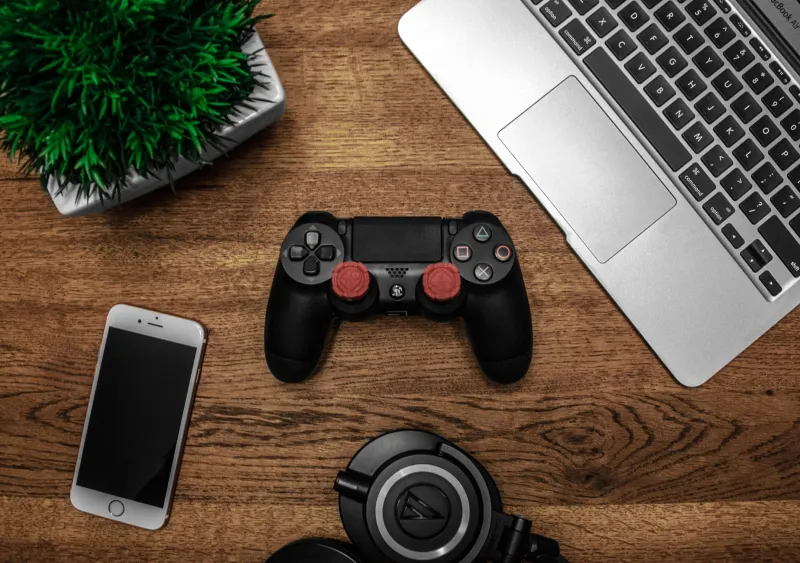
There's a moment in competitive slingshot gaming that a lot of players take for granted: the instant when your hand finds the controller, your fingers settle into position, and muscle memory takes over. For players with certain physical disabilities, that moment has historically been a barrier rather than a starting point. The genre's physics-driven precision — the fine adjustments in trajectory, the calibrated tension on a virtual launch — has sometimes felt like it was designed with one type of body in mind.
But that's starting to change in some genuinely meaningful ways, and the people driving that change aren't just developers checking a compliance box. They're disabled streamers competing at serious levels, hardware engineers building tools that didn't exist five years ago, and community advocates who've been pushing loudly and patiently for a seat at the table.
What Accessibility Actually Means in a Physics Game
When most people hear "accessibility in gaming," they picture colorblind modes and subtitle options. Those matter, but the accessibility challenge in slingshot gaming goes deeper. The genre lives and dies on precision input — timing, angle, force calibration. For players with limited hand mobility, motor control differences, or conditions affecting fine motor skills, the default control schemes can be genuinely prohibitive.
The good news is that the problem is solvable, and several studios have started proving it. Customizable control mapping — allowing players to reassign any action to any button or input — is increasingly standard in newer slingshot titles. Some games have introduced adjustable input sensitivity at a granular level, letting players slow down the targeting arc or widen the margin for a successful launch.
One significant development is the introduction of "aim assist" options that go beyond the standard shooter-game implementation. In some recent titles, players can enable a guided trajectory system that provides a slight magnetic pull toward optimal launch windows — not eliminating the skill requirement, but reducing the physical precision demand enough to make the game genuinely playable for a wider range of people.
The Adaptive Hardware Revolution
On the hardware side, the past few years have seen a real expansion of adaptive controller options compatible with popular gaming platforms. Microsoft's Adaptive Controller, originally designed for Xbox, has been adopted by PC slingshot players as a flexible base that connects to switches, pedals, joysticks, and other alternative input devices.
But the community has gone further. DIY adaptive hardware setups, shared through forums and Discord servers, have become a quiet but thriving subculture within slingshot gaming. Players have rigged foot pedals to handle launch timing, configured eye-tracking software to control targeting arcs, and built custom button arrays that distribute the control load across different body parts.
Derek S., a 29-year-old player from Portland, Oregon who has limited use of his right hand due to a nerve condition, has been competing in online slingshot tournaments using a custom setup that routes most controls through a combination of left-hand buttons and a foot switch. "People always assume I'm at a disadvantage," he says. "But I've been playing this way for two years. My setup is optimized for me. In some ways it's more consistent than using a standard controller because I built it specifically around my strengths."
Derek placed in the top 15 at a regional online event last year. He streams regularly and has become something of an informal resource for other players exploring adaptive setups.
Disabled Streamers Changing the Conversation
Visibility matters, and the growing presence of disabled streamers in the slingshot gaming space is reshaping how the broader community thinks about ability and competition.
Streamers like Maya K., who has cerebral palsy and streams her slingshot sessions to an audience of over 12,000 on Twitch, aren't just playing — they're demonstrating, in real time, that the assumptions about who can compete seriously in this genre are largely wrong. Maya's commentary is technical, her analysis sharp, and her chat engagement reflects an audience that's there for the gameplay, not the novelty.
"I got a lot of 'inspirational' comments early on that honestly felt condescending," Maya says. "What I actually want is for people to watch me play and just think — oh, she's good. That's it. That's the whole thing."
Her presence has also pushed developers to listen more carefully. She's participated in beta feedback programs for two different slingshot titles, specifically focused on accessibility features, and credits direct community pressure as the reason both games shipped with more robust options than their predecessors.
What Developers Still Need to Get Right
Progress is real, but the accessibility work in slingshot gaming is far from finished. Several persistent gaps remain frustrating for disabled players and advocates.
UI readability continues to be a problem in games with fast-moving physics elements — high-contrast modes and adjustable text sizes aren't universal yet. Competitive modes sometimes lock out accessibility features under the assumption that they create unfair advantages, a policy that effectively excludes disabled players from ranked play. And documentation around accessibility options is often buried or poorly explained, leaving players to discover features through trial and error.
The community's ask to developers is straightforward: treat accessibility as a first-class design consideration, not an afterthought. Build it in from the start. Test it with disabled players, not just internal QA teams. And don't gate accessibility features out of competitive modes without a genuinely transparent conversation about why.
Skill Has Always Been the Point
The deeper argument here isn't just about fairness or inclusion, though those matter enormously. It's about what competitive slingshot gaming actually is. At its core, the genre rewards strategic thinking, trajectory intuition, timing, and adaptability. None of those qualities are the exclusive property of any particular type of body.
When the tools exist to let every player express those qualities on their own terms, the competition gets better. The talent pool expands. The community grows. And the leaderboard starts reflecting something closer to the truth — that in slingshot gaming, like in most things worth doing, the best person for the shot is the one who's put in the work to earn it.