Wired Different: How Top Slingshot Competitors Are Building Custom Rigs to Win
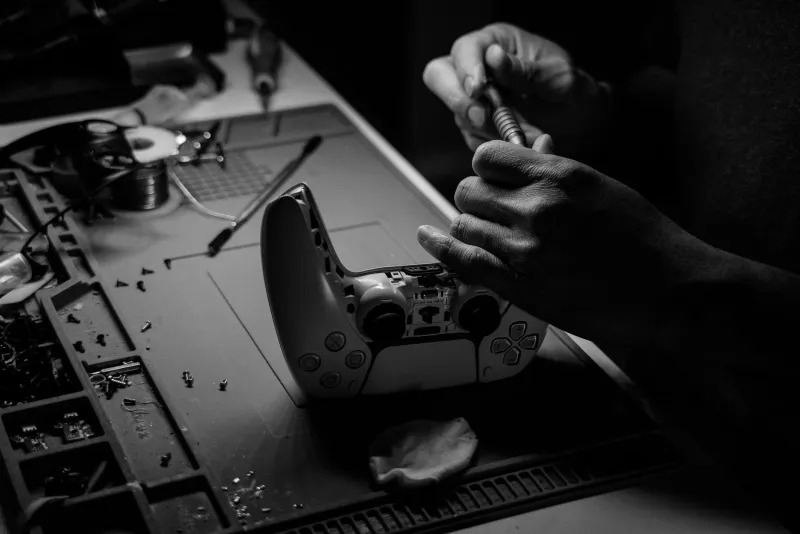
Walk into almost any serious slingshot gaming setup these days and you'll notice something's off. Not wrong, exactly — just different. The mouse is gone. In its place sits something that looks like it was assembled in a garage on a Tuesday night, because it probably was.
Across the country, a quiet but intensely passionate community of competitive slingshot players has started abandoning conventional input devices in favor of handbuilt controllers, modified joysticks, and purpose-engineered launch mechanisms. And according to the players who've made the switch, there's no going back.
The Problem with the Mouse
For years, mouse-based control was the default for PC slingshot titles. It's intuitive, widely available, and fine for casual play. But at the competitive level, "fine" is a liability.
The core issue is translation lag and arc inconsistency. When you're pulling a virtual band across a screen, a traditional mouse introduces tiny but compounding inaccuracies — micro-vibrations, surface friction variance, sensor drift. For a player targeting leaderboard positions measured in fractions of a point, those inaccuracies matter enormously.
"The mouse was designed for office work," says Marcus "Spool" Haines, a top-50 ranked player on the North American Slingshot Circuit who built his first custom input device from a repurposed arcade joystick and a tension sensor salvaged from a kitchen scale. "It's asking a screwdriver to do a surgeon's job."
Spool isn't alone in that diagnosis. Across forums, Discord servers, and the occasional Reddit deep-dive, competitive players have been circulating the same frustration for a couple of years now. The hardware just wasn't built for this.
Enter the Modders
The slingshot gaming hardware mod scene didn't emerge overnight. It evolved gradually from the broader custom controller community — the same folks who've been shaving gates off fighting game sticks and swapping analog sensors in racing wheels for decades. What's different here is the application.
Slingshot physics games demand a very specific kind of input: variable resistance that mimics the elastic tension of a real band, directional precision across a three-dimensional pull arc, and release timing accurate enough to differentiate between a 47-degree and a 48-degree launch angle. Off-the-shelf hardware simply wasn't engineered with those requirements in mind.
That's where people like Deja "Ricochet" Weston come in. Based out of Columbus, Ohio, Deja runs a small Etsy shop alongside her competitive career, selling what she calls "tension rigs" — custom-built input devices that use load cells and 3D-printed housings to simulate authentic slingshot resistance. Her waitlist currently stretches to four months.
"I started building for myself because I was losing shots I knew I'd calculated correctly," she explains. "The hardware was lying to me. Once I fixed that, my accuracy scores jumped almost immediately."
Her designs have since been iterated on by dozens of builders in the community, with open-source schematics shared freely across GitHub and dedicated mod forums.
What the Data Actually Shows
Anecdotal improvement is one thing. But is there measurable evidence that hardware mods translate to competitive results?
The numbers are suggestive, if not yet conclusive. A community-run analysis posted to the Slingshot HQ forums last spring tracked accuracy percentages across a sample of 200 competitive players over a six-month period. Players who reported using modified input devices showed a statistically notable improvement in high-angle precision shots — the kind of complex trajectories that separate good players from elite ones.
Critics of the analysis point out that self-reported data is unreliable and that players who invest in custom hardware may simply be more dedicated overall. That's a fair pushback. But even skeptics in the competitive scene are starting to take the hardware question seriously.
The Fairness Debate
Not everyone is thrilled about where this is heading. Some tournament organizers have started quietly wrestling with whether custom input devices should be regulated or banned outright in sanctioned events.
The argument against mods is straightforward: if expensive or technically sophisticated hardware provides a measurable edge, it creates a barrier that disadvantages players without the resources or technical knowledge to build or buy custom rigs. That's a legitimate equity concern in a scene that prides itself on accessibility.
"We've always said the best player wins, not the best gear," says one tournament coordinator who asked not to be named. "The second we let hardware become the deciding factor, we've changed what this competition is about."
But mod advocates push back hard on that framing. They argue that custom hardware is simply the next stage of player expression — no different from a pianist choosing a specific keyboard action or a chef selecting their own knives. The skill to build and calibrate the rig is itself part of the competitive equation.
"Anyone can download the schematics," Spool points out. "The barrier isn't money. It's learning. And learning has always been part of this game."
Where Things Are Headed
Major tournament bodies haven't issued formal hardware guidelines yet, but that window is closing fast. As custom rigs become more sophisticated and more common, the pressure to establish clear rules will only intensify.
In the meantime, the modding community keeps building. New tension sensor configurations, haptic feedback integrations, and even experimental eye-tracking rigs are already circulating in beta among the scene's most dedicated tinkerers.
Whether you see it as innovation or arms race probably depends on where you're sitting. But one thing is increasingly clear: in competitive slingshot gaming, the hardware conversation is no longer optional. The players who understand their input devices — and aren't afraid to modify them — are pulling ahead. Everyone else is still aiming with a screwdriver.